


Smart Ways to Maximize Space in Your Warehouse
- December 17, 2025
- 0
Running a warehouse is a constant battle against space constraints. As inventory grows and SKUs diversify, the walls seem to close in, leaving managers with a difficult choice:



9621 Agnes Crossing, Lake Suzanneview, New Mexico Island 84604-9295.
Running a warehouse is a constant battle against space constraints. As inventory grows and SKUs diversify, the walls seem to close in, leaving managers with a difficult choice:
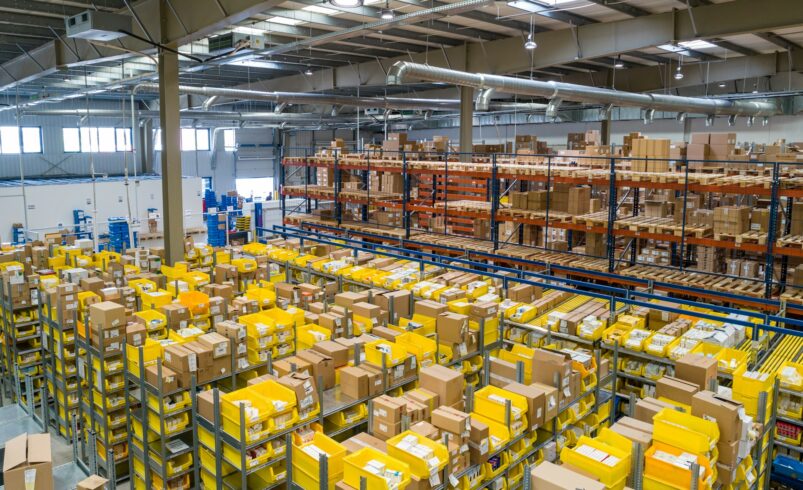
Running a warehouse is a constant battle against space constraints. As inventory grows and SKUs diversify, the walls seem to close in, leaving managers with a difficult choice: expand the facility at a high cost or find smarter ways to utilize existing square footage.
Optimizing your layout isn’t just about fitting more boxes onto shelves; it’s about improving workflow, enhancing safety, and boosting overall productivity. A well-organized warehouse reduces retrieval times, minimizes errors, and ensures that your team can move freely without navigating a maze of clutter.
Effective warehouse organization starts with evaluating your current setup and identifying underutilized areas—specifically, vertical space.
By implementing the right industrial storage strategies, you can transform a cramped facility into a model of efficiency. This guide explores six top solutions that will help you reclaim valuable floor space and streamline your operations.
Selective pallet racking is the most common storage system found in warehouses today, and for good reason. It provides direct access to every pallet, making it an excellent choice for operations with high SKU counts and low-to-medium turnover.
The primary advantage of selective racking is accessibility. Forklift operators do not need to move other pallets to reach the one they need.
This “first-in, first-out” (FIFO) capability is crucial for businesses dealing with perishable goods or products with expiration dates. The system is also highly adjustable, allowing you to reconfigure beam heights to accommodate different load sizes as your inventory changes.
While selective racking offers 100% selectivity, it does require a significant number of aisles. To maximize industrial storage in this configuration, consider narrow aisle trucks.
By reducing aisle width, you can fit more rows of racking into the same footprint, effectively increasing your storage capacity without sacrificing accessibility.
For warehouses that stock large quantities of similar products, drive-in and drive-through racking systems offer high-density storage by eliminating the need for operating aisles between racks.
These systems allow forklifts to drive directly into the rack structure to deposit or retrieve pallets. This design is perfect for “last-in, first-out” (LIFO) inventory management, where rotation isn’t a priority. By minimizing aisles, you can utilize up to 75% more space than standard selective racking.
Drive-in racking is best suited for cold storage facilities or bulk storage applications where space is at a premium and stock rotation is less critical. However, it requires skilled forklift operators to navigate the tight spaces safely, so robust training protocols are essential.
When you can’t build out, build up. Mezzanine floors are semi-permanent structures that create a second (or even third) level within your warehouse, effectively doubling your usable floor area.
Mezzanines utilize the often-wasted vertical space above your existing operations. This new level can be used for a variety of purposes, such as:
Installing a mezzanine is significantly cheaper and faster than moving to a new facility or constructing an extension.
It allows you to stay in your current location longer, maximizing your return on investment. Because mezzanines are free-standing and can be dismantled, they offer flexibility if your business needs change in the future.
Push back racking offers a middle ground between high-density storage and selectivity. It uses a system of nested carts that ride on inclined rails.
When a forklift places a new pallet into the lane, it pushes the previous pallet back. When a pallet is removed, gravity gently moves the next one forward to the picking position. This allows for storage up to six pallets deep.
Push-back racking provides better selectivity than drive-in systems because each lane can house a different SKU.
It significantly increases storage density compared to selective racking while maintaining easy access to inventory. This solution reduces pick times because operators don’t have to drive inside the racking structure, enhancing both speed and safety.
For large-scale operations looking to maximize efficiency and minimize labor costs, Automated Storage and Retrieval Systems (AS/RS) represent the cutting edge of warehouse technology.
AS/RS utilizes computer-controlled systems to automatically place and retrieve loads from defined storage locations. These systems can reach heights that standard forklifts cannot, utilizing the full vertical volume of your warehouse.
These automated solutions often integrate seamlessly with the best palletizing systems, creating a fully automated workflow from production to storage.
While the initial investment is high, the long-term savings in labor, reduced damage rates, and optimized space usage can be substantial for high-volume distribution centers.
Standard pallet racks aren’t suitable for everything. If your inventory includes long, bulky, or awkwardly shaped items like lumber, piping, or furniture, cantilever racking is the ideal storage solution.
Cantilever racks consist of a base, upright columns, and arms that extend outward. There are no front columns to obstruct access, making it easy to load and unload items of varying lengths.
These racks can be configured as single-sided units placed against walls or double-sided units for aisle access.
Arms can be adjusted to accommodate different material heights, ensuring you don’t waste vertical space. By organizing these difficult-to-store items properly, you clear floor space and reduce the risk of inventory damage.
Maximizing warehouse space is an ongoing process of analysis and adjustment. By implementing the right mix of storage solutions—whether it’s high-density racking, vertical mezzanines, or automated systems—you can significantly improve your operational capacity.
Remember that the goal isn’t just to pack more in, but to create a flow that allows your business to thrive. A well-organized warehouse leads to faster fulfillment, safer employees, and a healthier bottom line.
Evaluate your current needs, anticipate future growth, and choose the systems that provide the flexibility required to adapt to a changing market.